A NEW PERSPECTIVE ON MEDICINE
Explore the human body.
Discover the future of care.
An interactive knowledge platform exploring medicine, the human body, conditions, medical science and new technology — every fact linked to its source.
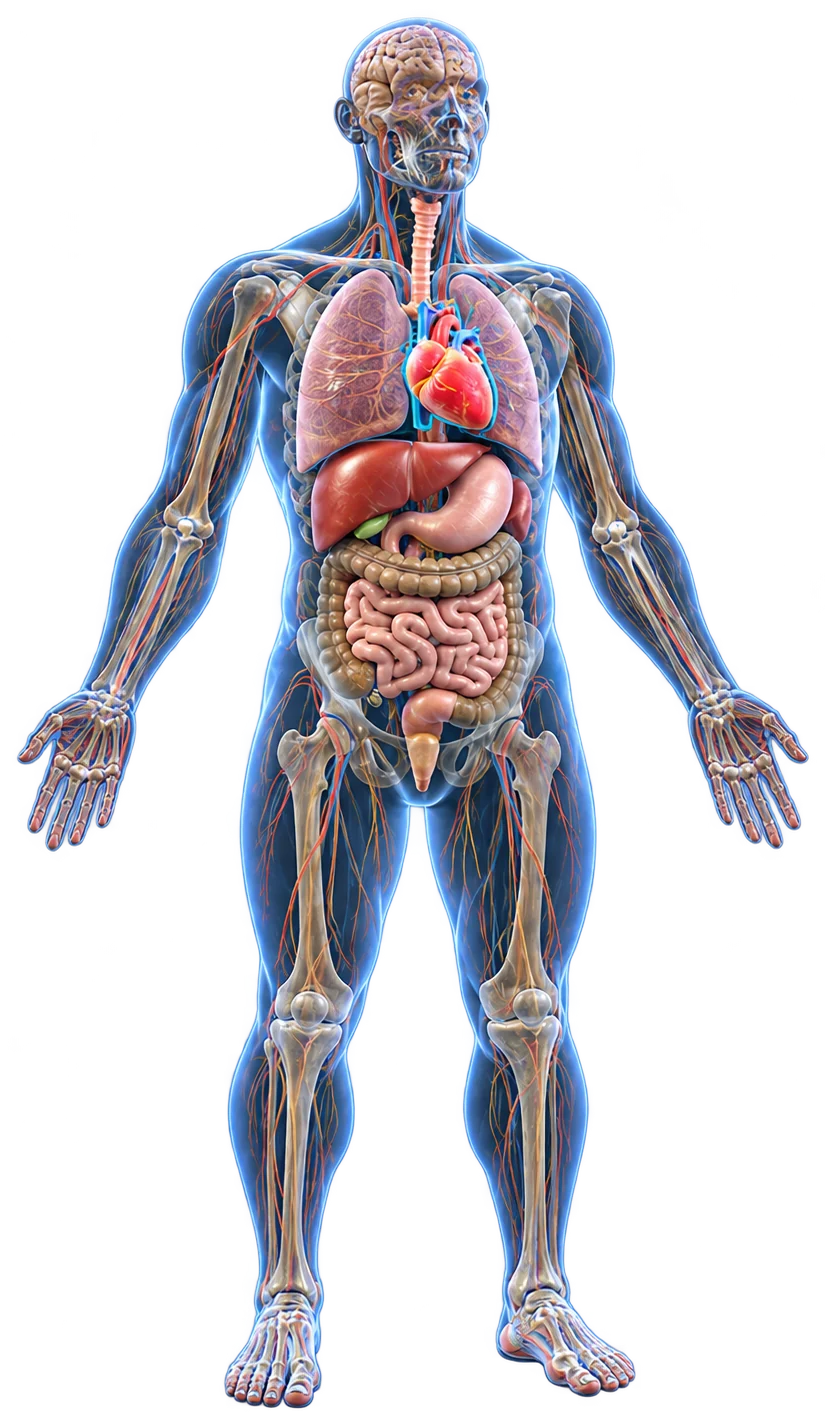
3D loads on demand · About 32 MB
Z-Anatomy / Vanatome · CC BY-SA 4.0What is Medi.kharousi?
Starts with medicine itself
Before diseases and drugs: how the body works and how medicine knows what it knows.
A network, not pages
Every organ, condition, test and medicine is a linked node; start anywhere.
Every fact has a source
References from health agencies and journals, with evidence strength and review date.
Explains, never diagnoses
No diagnosis, no dosing, no invented probabilities — red flags come first.
The journey of medicine
Open page- c. 1600 BCEEgyptian medical papyri
- 13th centuryIbn al-Nafis and pulmonary circulation
- 1796Jenner and vaccination
- 1895X-rays
- 1953The structure of DNA
- 2018First autonomous AI diagnosis
Medicine today
Open pageHow modern medicine works, from the first symptom to long-term follow-up.
Discover the human body
A 3D anatomical model: pick a structure, control the layers, and continue to organ and system pages.
- Control & regulation Nervous systemBrainEndocrine system
- Circulation & breathing Circulatory systemHeartBloodRespiratory systemLungs
- Digestion & metabolism Digestive systemLiverPancreas
- Filtering & excretion Urinary systemKidneys
- Movement & support Muscular systemSkeletal systemJoints
- Defence & protection Immune systemLymphatic systemSkin
- Senses EyeEar
- Reproduction Reproductive system
Medical encyclopedia
Open pageA knowledge network — start from any type.
- Organs8
- Body systems16
- Conditions57
- Symptoms7
- Lab tests9
- Medicines2
- Drug classes2
- Procedures7
- Specialties33
- Comparisons1
- Topics16
- Body regions7
- Health tools5
- Research & evidence9
- Modern medicine22
- Future of medicine10
Educational guide (Arabic)
Open the guideA plain-language Arabic guide in 19 parts: symptoms, conditions, tests and treatments, plus general advice, a glossary and summary tables.
Start hereCommon symptoms: when are they serious?20 symptoms, each with causes, red flags that need an ambulance, tests, treatment and advice (in Arabic).Modern medicine
22 modern medical technologies — from genomics and cell and immune therapies to devices, robotic surgery and AI — each with a five-level maturity rating, official sources and the date its status was last checked.
Artificial intelligence in medicine
Open pageFuture of medicine
Ten much-discussed research paths — from brain–computer interfaces and xenotransplantation to bioprinted organs and digital twins — clearly separating what is being tested in people from what is still in the lab, and what separates each from clinical use.
Open pageResearch: how sure are we?
Open page- Strong evidenceHigh confidence that the true effect is close to the estimate; usually based on large, consistent randomised trials or systematic reviews of them.
- Moderate evidenceThe true effect is probably close to the estimate, but new research could change it.
- Limited evidenceLimited confidence; the true effect may differ substantially from the estimate.
- Very low evidenceVery little confidence; the estimate is highly uncertain.
- Preliminary researchLaboratory, animal or very small human studies — not enough for a clinical recommendation.
- Under studyAn open question under study, with no conclusive results yet.
Health tools
Open pageEducational tools that run entirely in your own browser — nothing you enter is sent to any server. Each calculator is built on a published formula or reference range from a credible health source, cited on its page.
Search medical knowledge
Arabic, English or abbreviation — e.g. kidney, HbA1c, diabetes
Source registry
Open page- WHO 21
- NIDDK 20
- NCI SEER Training 19
- NHS 14
- Nobel Prize 9
- NHLBI 8
- MedlinePlus 8
- Encyclopaedia Britannica 8
- U.S. FDA 5
- NIBIB 3
- U.S. National Library of Medicine 3
- NEI 2
- NINDS 2